Search High Power Resistors

About Our High-Power Resistors Portfolio

High-power resistors are designed to dissipate significant electrical energy while delivering dependable performance under sustained electrical loading. TT Electronics offers robust solutions for industrial power supplies, motor controls, braking systems, renewable energy and other demanding power electronic applications. Available in wirewound, thick-film and tubular constructions, the portfolio includes selected thick-film-on-stainless-steel solutions rated up to 1.49kW on a specified fan-cooled heatsink.

TT Electronics' High-Power Heritage
 

TT Electronics' High-Power Heritage

TT Electronics' resistor heritage spans three market-leading brands — BI Technologies, IRC and Welwyn — with a combined track record of over seventy years in resistive component innovation. Power is a thread through all three: Welwyn's earliest products, introduced in 1937, were vitreous enamelled wirewound resistors; the same brand introduced thick film on steel power resistors in the 1990s; and BI Technologies has developed power resistor solutions over subsequent decades.

Read the full BI Technologies, IRC and Welwyn heritage story.
Featured High-Power Resistor Products

Thick Film on Stainless Steel, Heatsink-Mounted (WDBR, WDBR-UL series)

Thick Film on Stainless Steel, Heatsink-Mounted (WDBR, WDBR-UL series)

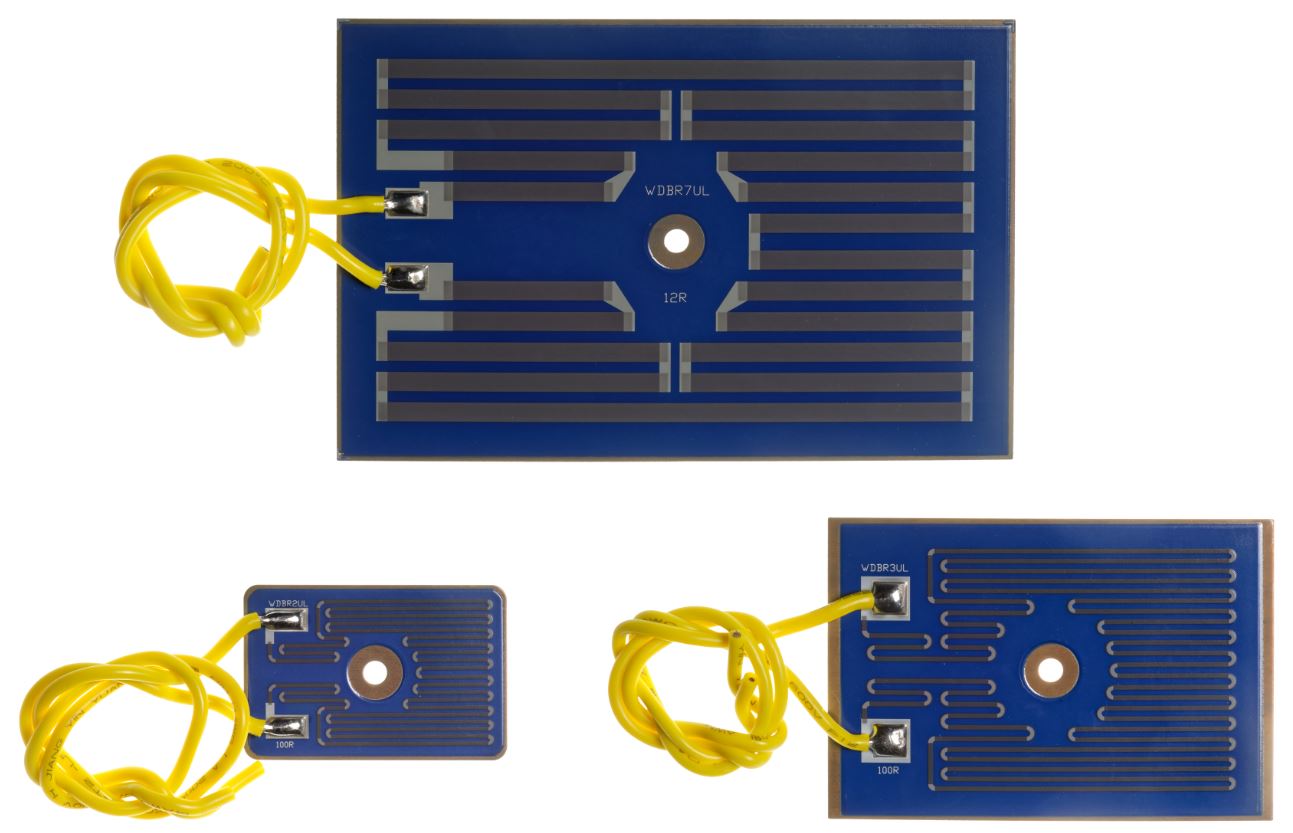
Ultra-low-profile thick-film-on-steel power resistors for demanding energy-dissipation applications. WDBR ratings range from 160W to 280W on a specified heatsink without forced-air cooling and from 300W to 1.49kW on the same heatsink with 5m/s forced-air cooling, at 25°C air temperature. WDBR-UL adds UL 508 recognition, with forced-air-cooled ratings from 660W to 1.41kW.

Aluminium-Housed Wirewound (WH series) and Radial Wirewound (WPRT series)

Aluminium-Housed Wirewound (WH series) and Radial Wirewound (WPRT series)

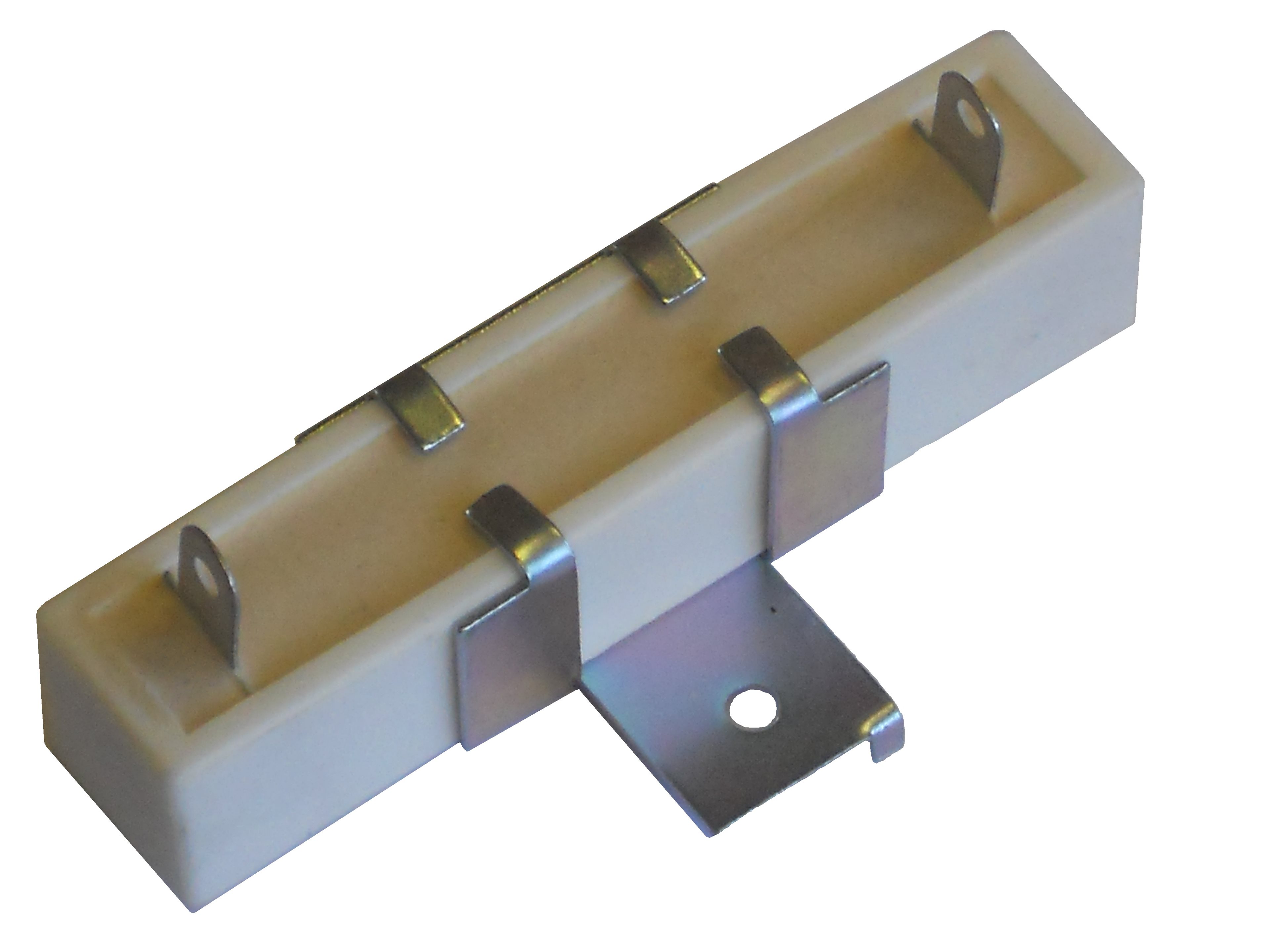
Metal-clad, heatsink-mounted wirewound resistors for sustained power and overload handling. WH products cover power ratings from 10W to 300W. WPRT provides a radial-terminal wirewound format for high-power and high-surge applications, with selected products AEC-Q200 qualified.

Tubular Vitreous Enamelled Wirewound (1600–1900 series)

Tubular Vitreous Enamelled Wirewound (1600–1900 series)

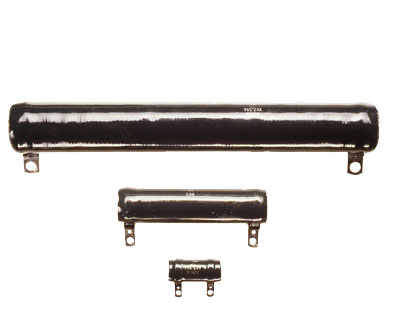
Large-format tubular wirewound resistors for sustained power dissipation, with power ratings from 14W to 208W and limiting element voltages up to 1.2kV. Their vitreous enamelled construction suits industrial power, load and discharge applications where a robust through-hole or chassis-mounted resistor is required.

Heatsink-Mount Semiconductor-Style Packages (WMHP, WSMHP series)

Heatsink-Mount Semiconductor-Style Packages (WMHP, WSMHP series)

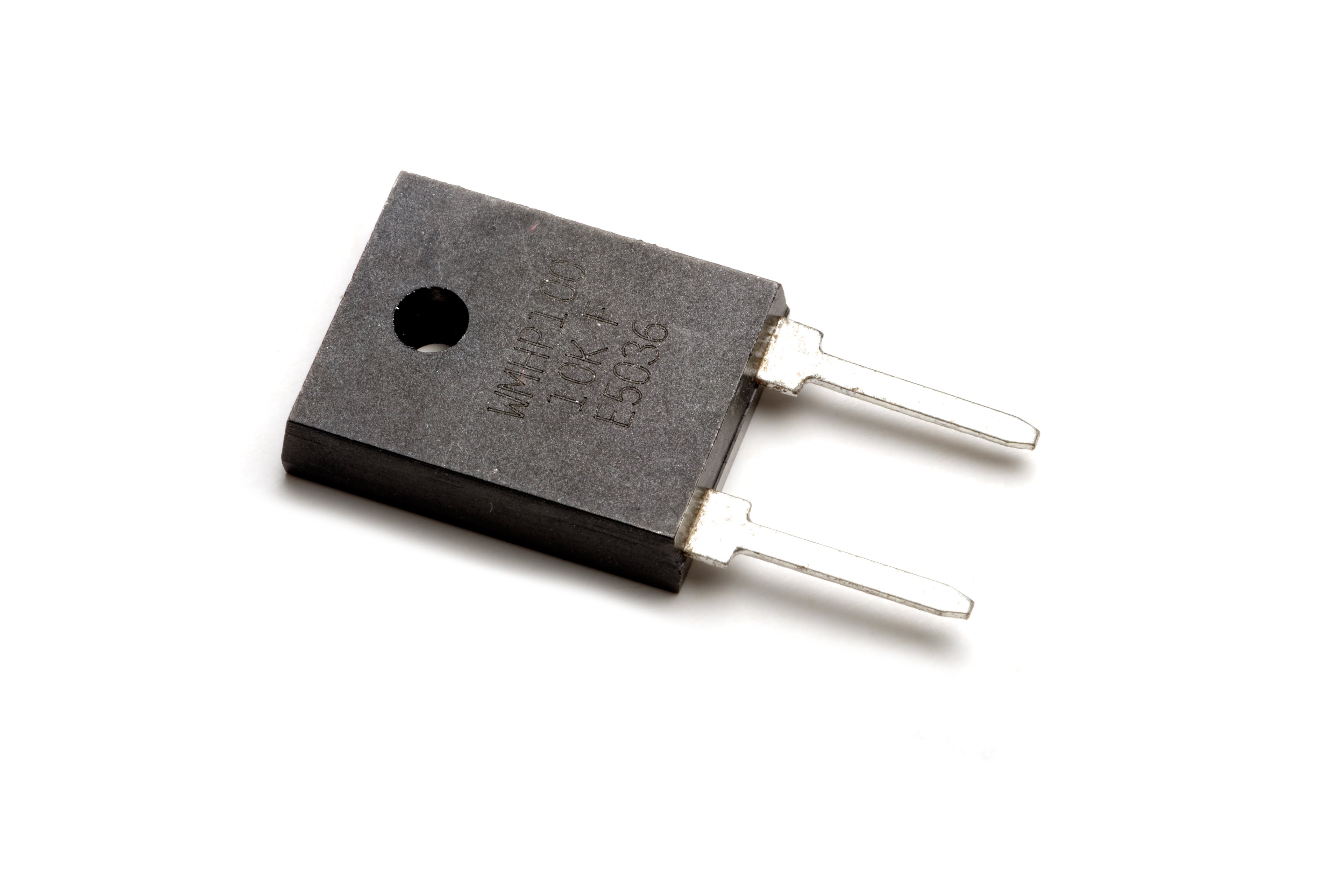
Non-inductive thick-film power resistors in compact semiconductor-style packages. WMHP offers TO-220 and TO-247 options rated from 20W to 100W on a heatsink, while WSMHP provides a TO-263 surface-mount format rated at 20W, 25W or 35W on a heatsink. WMHP20 and WMHP35, and the WSMHP range, are AEC-Q200 qualified. Rated power depends on maintaining the specified flange temperature and mounting the component to an appropriate heatsink.

Planar and Ceramic-Case Power (BPC, BPR, SQP, CAF, CAW, SQM, CVF, CVW series)

Planar and Ceramic-Case Power (BPC, BPR, SQP, CAF, CAW, SQM, CVF, CVW series)

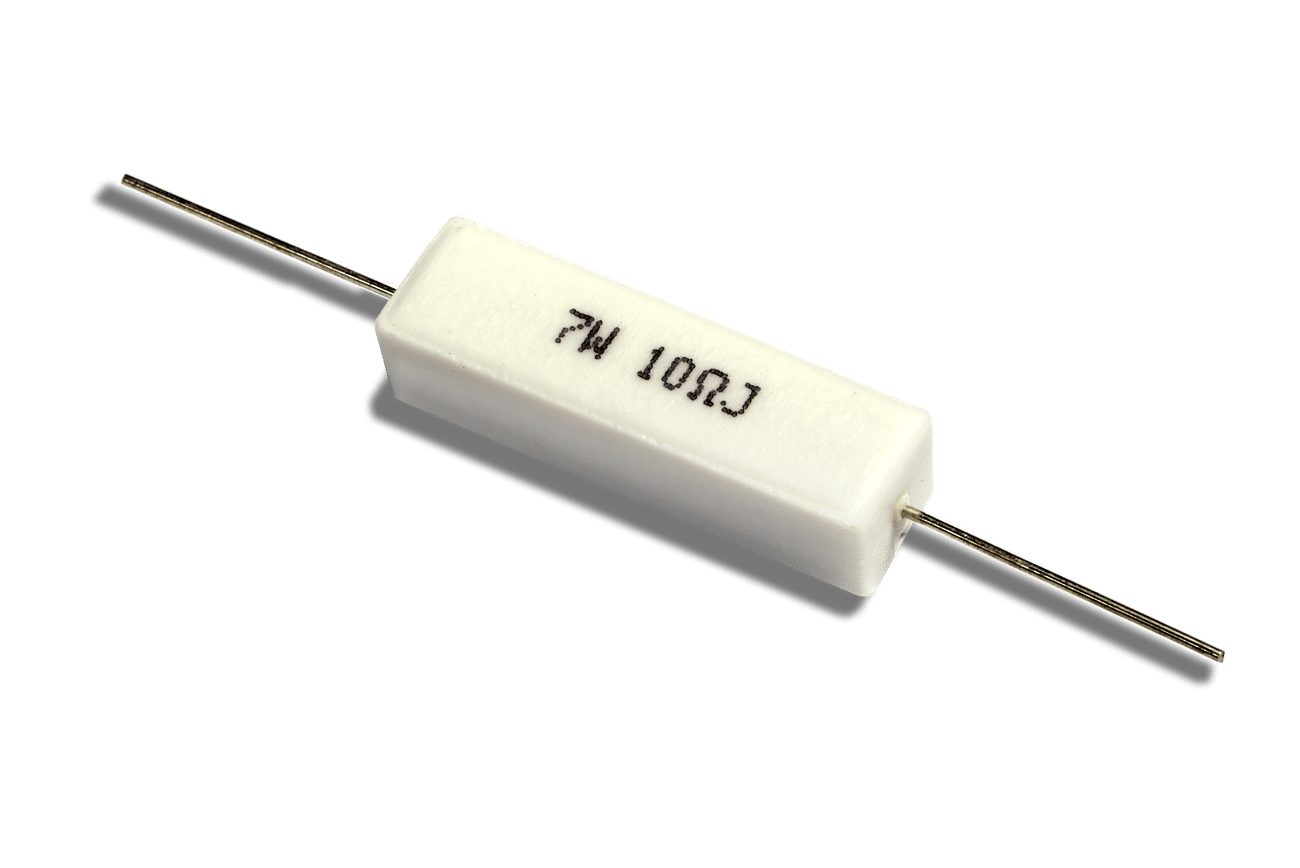
Board-level power resistor options spanning planar and ceramic-case constructions. BPC planar products cover ratings from 3W to 10W, while BPR extends to higher power and is designed for robust mechanical performance. SQP, CAF, CAW, SQM, CVF and CVW families provide ceramic-case and radial power resistor options for industrial, power conversion and control applications.

Industrial power supply electronics
 

Selecting the Right High-Power Resistor

  • Rated Conditions Matter — High-power ratings depend on how the component is mounted and cooled. WDBR ratings, for example, assume a specified 0.53°C/W heatsink, with higher ratings under 5m/s forced-air cooling. Always follow the datasheet guidance for heatsink performance, thermal-interface material, mounting pressure and fixing torque.
  • Continuous vs. Pulse — Size the resistor for continuous or average dissipation first, then check peak power, pulse energy, pulse duration, repetition rate and duty cycle. A continuous wattage rating alone does not establish suitability for braking, inrush or transient events.
  • Power Rating — The maximum continuous power a resistor can dissipate under its specified thermal conditions. For heatsink-mounted parts, flange or heatsink temperature can be the controlling reference. Above the resistor's Critical Resistance, Limiting Element Voltage may restrict the usable power.
  • Derating — Available power falls as ambient, flange or heatsink temperature rises. Apply the product-specific derating curve and select with suitable thermal margin rather than operating continuously at the published limit.
  • Operating Temperature — Distinguish between Rated Ambient or Rated Flange Temperature, where full rated power applies, and Maximum Ambient, Flange or Element Temperature. These values are not interchangeable.
  • Construction — Choose wirewound for sustained power and strong overload capability, thick film on steel for compact high-wattage heatsink mounting and low inductance, and planar or semiconductor-style packages for board-level power and higher-frequency switching applications.

Frequently Asked Questions

What is a high-power resistor?

A high-power resistor is designed to dissipate relatively large amounts of electrical energy as heat while maintaining its specified resistance and reliability. Depending on the construction, it may be mounted to a PCB, chassis or heatsink and may require forced-air cooling to achieve its highest rating.

How is the power rating of a heatsink-mounted resistor defined?

The rating is specified under defined thermal conditions, such as a particular heatsink thermal resistance, flange temperature, ambient temperature, airflow and mounting method. If the actual heatsink or airflow is less effective than the datasheet condition, the usable power rating will be lower.

What is the difference between wirewound and thick-film high-power resistors?

Wirewound resistors use resistive wire wound around an insulating core and are commonly selected for sustained power, overload and surge handling. Thick-film high-power resistors use a printed resistive layer on a ceramic or insulated metal substrate, enabling compact, low-inductance and heatsink-mounted designs. The right choice depends on power, pulse energy, resistance value, inductance, package and thermal constraints.

What are high-power resistors used for?

High-power resistors are used for dynamic braking, pre-charge and inrush-current limiting, capacitor discharge, snubber circuits, load banks, power-supply regulation, motor control and energy dissipation in renewable-energy and industrial power systems.

What is a braking resistor?

A braking resistor dissipates electrical energy returned by a motor during deceleration. In a drive system, it helps control the DC-link voltage by converting braking energy into heat. Selection must consider resistance, peak and average power, pulse duration, duty cycle, voltage, cooling and safe failure behaviour.

Related resistor categories: All Resistors  |  Wirewound Resistors  |  Thick Film Resistors  |  Pulse Withstanding Resistors