Search Thick Film Resistors

View All Resistors

About Our Thick Film Resistor Portfolio

Thick film resistors provide an excellent balance of performance, size and value across a broad range of electronic applications. TT Electronics offers thick film solutions engineered for reliable operation in industrial, automotive and power electronic systems, enabling engineers to optimise performance, thermal management and board space while supporting both general-purpose and higher-power circuit designs.

TT Electronics' Thick Film Heritage
 

TT Electronics' Thick Film Heritage

TT Electronics' resistor heritage spans three market-leading brands — BI Technologies, IRC and Welwyn — with a combined track record of over seventy years in resistive component innovation. Thick film runs through all three: BI Technologies developed cermet materials in the mid-1950s and, in the early 1960s, pioneered thick film materials for compact resistor networks. IRC went on to develop proprietary thick film chips in the 1990s, and Welwyn brought thick film on steel to power resistors in the same decade.

Read the full BI Technologies, IRC and Welwyn heritage story.
Featured Thick Film Resistor Products

General-Purpose and Green SMD Chip (WCR, GWCR, CR series)

General-Purpose and Green SMD Chip (WCR, GWCR, CR series)

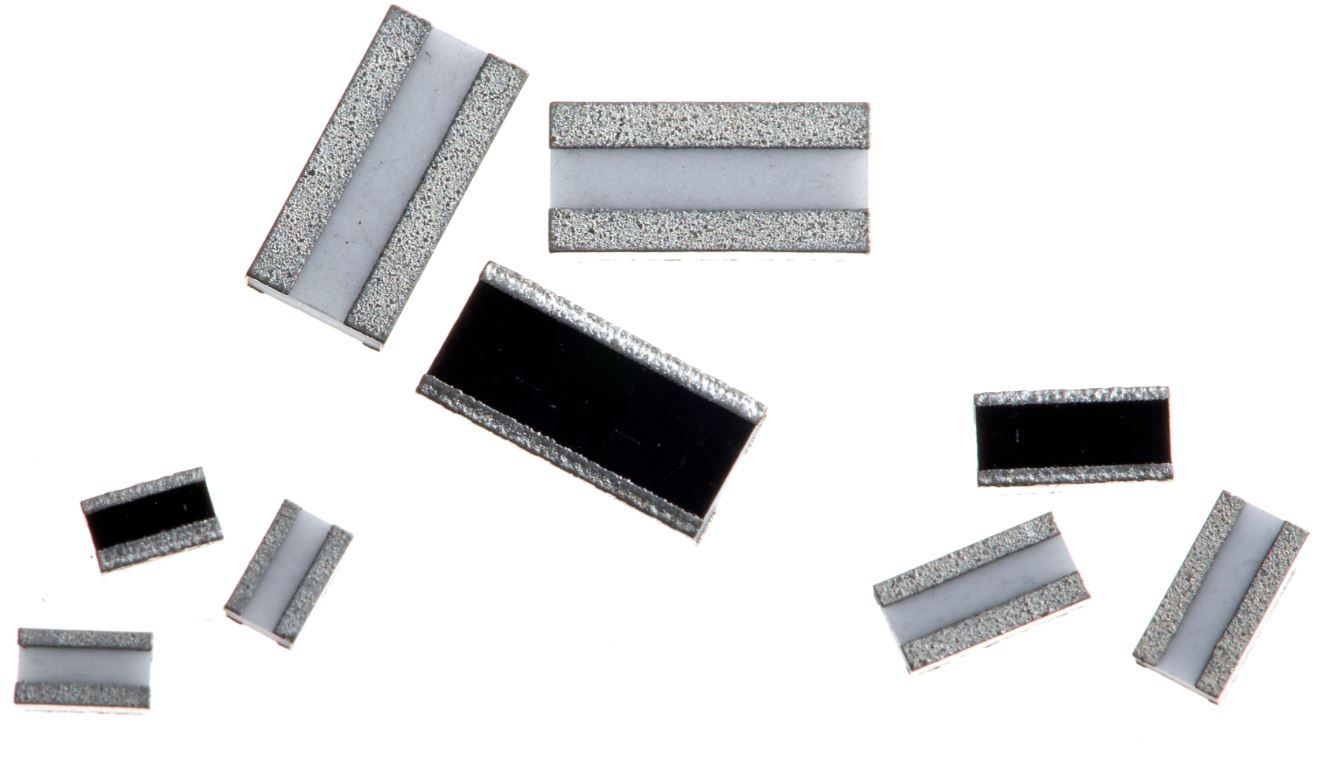
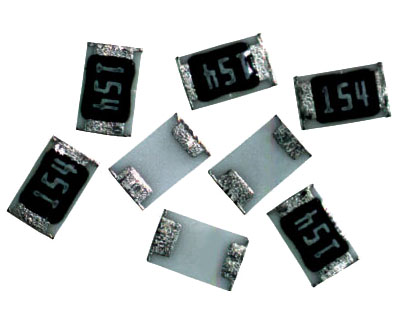
Everyday surface-mount (SMD) thick film resistors. WCR general-purpose chips cover approximately 0.05W–1W, with selected parts AEC-Q200 qualified; GWCR is the exemption-free RoHS “green” range, covering 0.031W–1W; and CR is a high-reliability range, with selected variants available with gold terminations and selected parts approved to EN 140401 / IECQ-CECC 40401.

Higher-Power Chip and Heatsink-Mount (WHPC, HPDC, SC3, WSMHP, WMHP series)

Higher-Power Chip and Heatsink-Mount (WHPC, HPDC, SC3, WSMHP, WMHP series)

Thick film solutions for higher power dissipation include WHPC extra-high-power chips rated up to 2W, HPDC high-power-density chips rated from 2.4W to 3.5W, SC3 rated at 3W, and heatsink-mounted packages including WSMHP in TO-263, rated from 20W to 35W, and WMHP in TO-247, rated from 20W to 100W. Selected series are AEC-Q200 qualified.

Anti-Sulphur and High-Temperature Chip (ASC, HTC, HTCR series)

Anti-Sulphur and High-Temperature Chip (ASC, HTC, HTCR series)

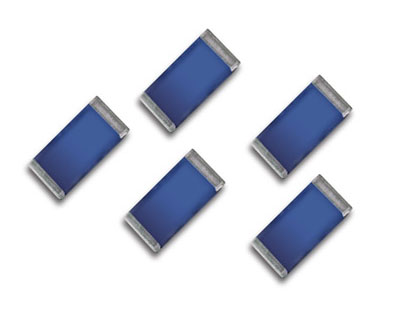
Designed for harsher operating environments. ASC anti-sulphur chip resistors are AEC-Q200 qualified and rated from 0.063W to 1W. HTC thick film chips support operation up to 200°C, while HTCR variants support operation up to 250°C and offer termination options for wire bonding, conductive adhesive or soldering.

Thick Film on Steel Power Resistors (WDBR, WDBR-UL series)

Thick Film on Steel Power Resistors (WDBR, WDBR-UL series)

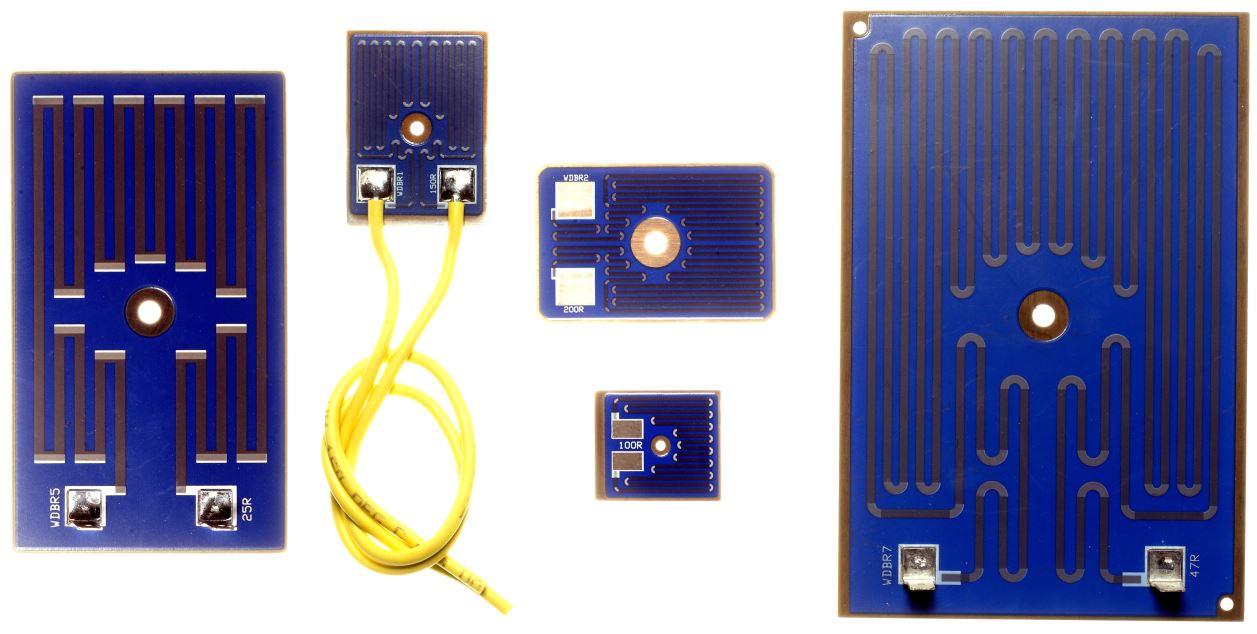
Ultra-low-profile, heatsink-mounted power resistors. WDBR continuous ratings range from 160W to 280W with natural convection and from 300W to 1.49kW with forced-air cooling. WDBR-UL ratings range from 170W to 260W with natural convection and from 660W to 1.41kW with forced-air cooling, with UL 508 certification.

Resistor Networks and Chip Arrays (BCN, GBCN, L series)

Resistor Networks and Chip Arrays (BCN, GBCN, L series)

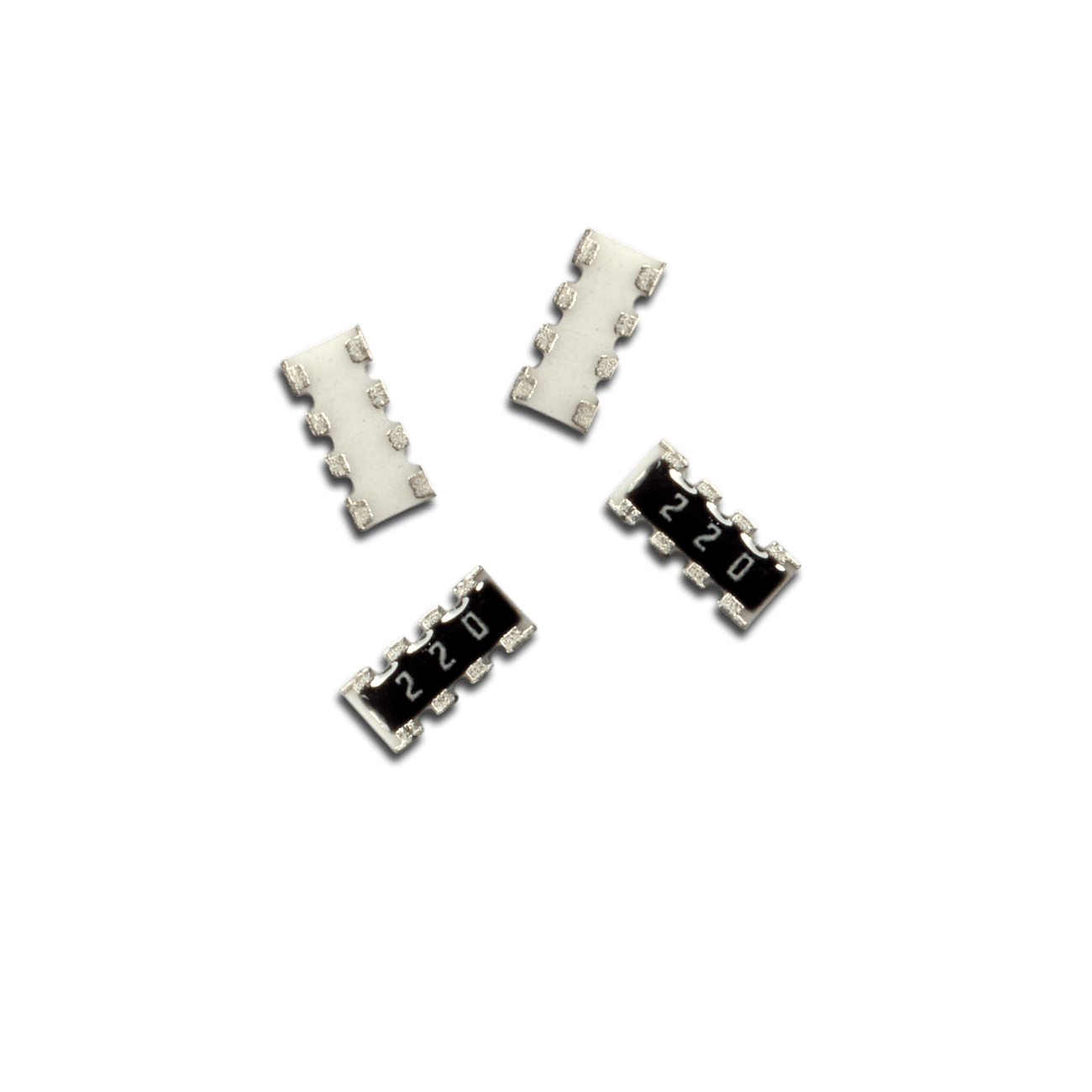
Four-element isolated chip arrays, including 0804 and exemption-free RoHS 1206 formats, and 4-pin SIL resistor networks help reduce board space and placement time.

Specialist Thick Film Families

Specialist Thick Film Families

Pulse-withstanding chips (PWC, HPWC, DSC and HDSC), high-voltage and high-value thick film resistors (HVC, T40, VRW, HR and others), low-value current sense chips (LR and LRCS) and fusible chips (FCR) all use thick film technology.

Industrial power supply electronics
 

Selecting the Right Thick Film Resistor

  • Standard vs. Specialist — Start with the general-purpose chip ranges and move to a specialist family when the application demands pulse-energy handling, high voltage, current sensing or fusing.
  • Power Rating — The maximum continuous power a resistor can dissipate at or below its Rated Ambient Temperature. Above the resistor's Critical Resistance, power rating stops being the limiting factor and Limiting Element Voltage takes over.
  • Tolerance & TCR — Best Tolerance and Best TCR define the highest-precision grades available and may apply only to a restricted ohmic range. Confirm the specific part's datasheet rather than relying on a single series-wide figure.
  • Thermal Management — Higher-power thick film parts, including WSMHP, WMHP and WDBR, are rated under defined mounting and cooling conditions. Their usable power rating depends on heatsinking and thermal management, not on the component alone. See the High Power page and product datasheets for rated conditions.
  • Operating Temperature — Check the Rated Ambient Temperature, where full power rating still applies, against the Maximum Ambient Temperature, which is the upper operating limit.
  • Environment — For shock, vibration, humidity, sulphur exposure or other harsh conditions, specify parts tested and qualified against the relevant standard, such as ASC anti-sulphur or AEC-Q200-qualified ranges, rather than assuming a catalogue-standard part will survive.

Frequently Asked Questions

What are thick film resistors used for?

Thick film resistors are used for general-purpose resistance, voltage division, current limiting and signal conditioning, as well as specialist functions including pulse handling, high-voltage control, current sensing and power dissipation. Their combination of compact size, broad resistance range and cost-effective construction suits industrial, automotive and power electronic systems.

What is the difference between thick film and thin film resistors?

Thick film resistors use a screen-printed resistive material fired onto a ceramic or metal substrate, providing a broad resistance range, strong pulse capability and good value. Thin film resistors use a much thinner deposited resistive layer and are generally preferred where tighter tolerance, lower TCR and greater precision are required.

Are TT Electronics thick film resistors AEC-Q200 qualified?

Selected TT Electronics thick film series and part variants are AEC-Q200 qualified, including products within the WCR, WHPC, SC3, ASC, BCN and GBCN families. Qualification is not universal across every thick film product, so confirm the specific series and part number against its datasheet.

When should I choose thick film over wirewound?

Choose thick film when compact surface-mount packaging, board-space efficiency, a broad resistance range and cost-effective automated assembly are priorities. Choose wirewound when the application places greater emphasis on continuous power dissipation, high surge energy or robust overload performance, while considering the inductance inherent in conventional wirewound construction.

Related resistor categories: All Resistors  |  Metal Film Resistors  |  Wirewound Resistors  |  Pulse Withstanding Resistors  |  High Voltage Resistors  |  Current Sense Resistors  |  Fusible Resistors  |  High Power Resistors