Search Metal Film Resistors

About Our Metal Film Resistor Portfolio

Metal film resistors are designed for applications where precision, stability and long-term accuracy are critical. TT Electronics' portfolio delivers low noise, excellent temperature stability and tight tolerance performance for instrumentation, medical, industrial, aerospace and other precision analogue applications where consistent electrical performance is essential.

TT Electronics' Metal Film Heritage
 

TT Electronics' Metal Film Heritage

TT Electronics' resistor heritage spans three market-leading brands — BI Technologies, IRC and Welwyn — with a combined track record of over seventy years in resistive component innovation. Precision film is where much of that heritage sits: IRC was the original developer of nichrome thin film resistors in the 1950s, a step change in the precision available to designers, and in the 1960s adopted moisture-resistant tantalum nitride films originally invented at Bell Labs. That precision-film lineage runs through today's metal film range, from ultra-precision leaded parts to thin-film chip resistors.

Read the full BI Technologies, IRC and Welwyn heritage story.
Featured Metal Film Resistor Products

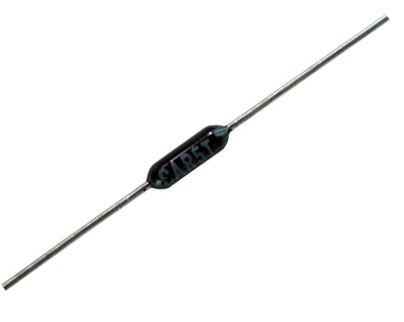
Ultra-Precision and Precision Axial Leaded (CAR, RC, RCP series)

Ultra-Precision and Precision Axial Leaded (CAR, RC, RCP series)

Axial leaded parts for analogue front ends, instrumentation and reference circuits. CAR5 and CAR6 offer 0.01% best tolerance and 5ppm/°C best TCR, with a 10Ω–1MΩ resistance range. CAR5 is rated at 0.25W at 70°C, while CAR6 is rated at 0.25W at 70°C or 0.125W at 85°C. RC and RCP precision metal film parts offer 0.05% best tolerance and 5ppm/°C best TCR, with selected RC products approved to EN 140101 and IECQ-CECC 40101.

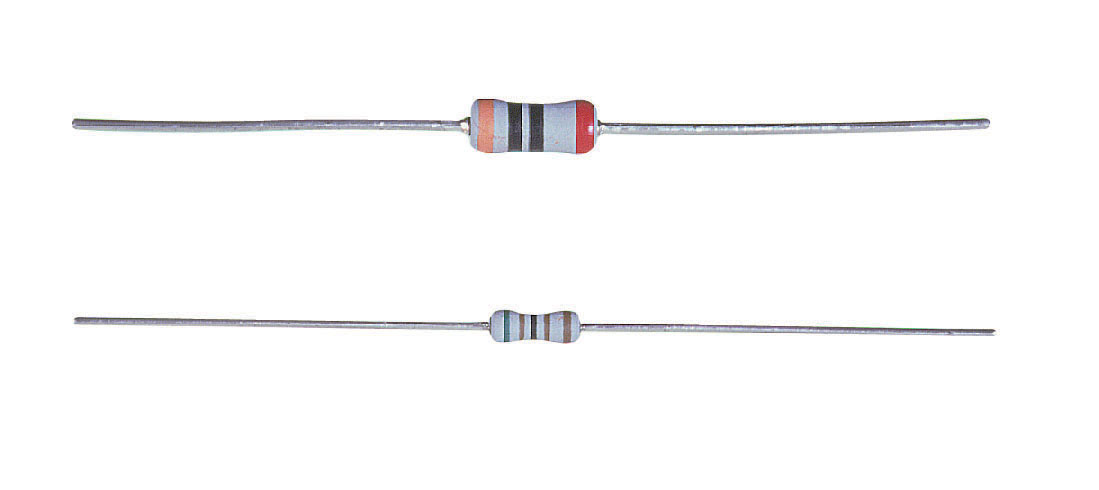
General-Purpose, Power and Flameproof Metal Film (MFR, MF-S, MFP series)

General-Purpose, Power and Flameproof Metal Film (MFR, MF-S, MFP series)

Metal film resistors for industrial and general analogue applications. MFR covers general-purpose requirements, with selected parts approved to IECQ-CECC 40101. MF-S extends the technology into higher-power ratings, while MFP adds a flameproof coating for applications requiring improved resistance to overload and flame propagation.

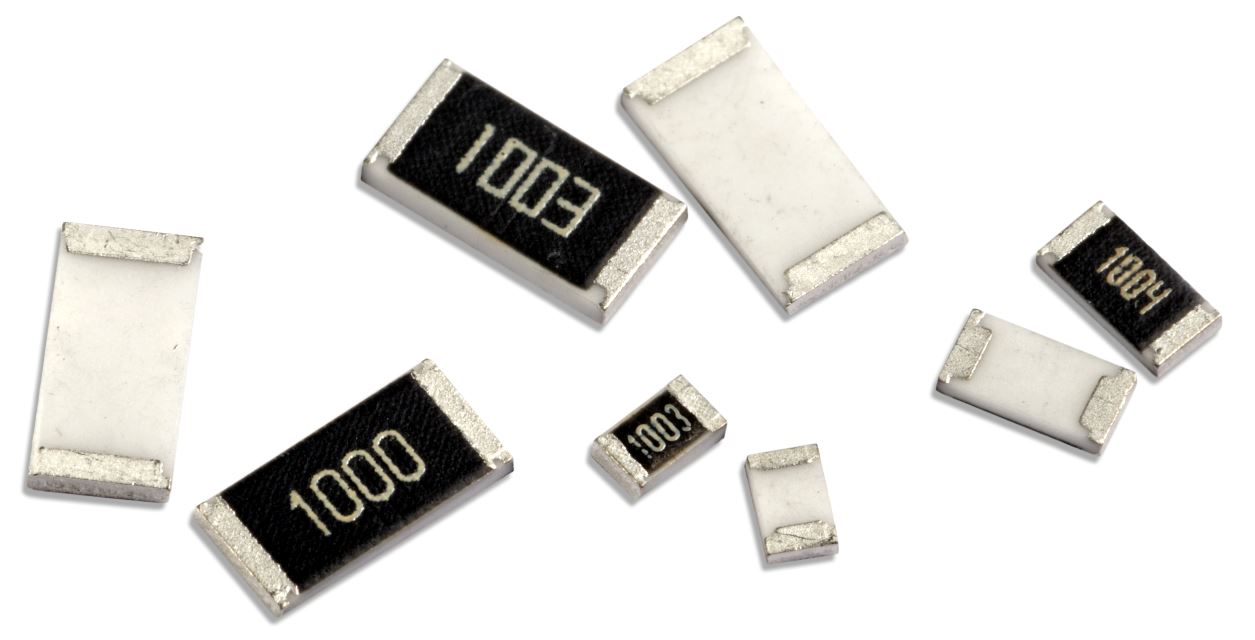
Thin-Film Chip (PCF, APC, TFHP series)

Thin-Film Chip (PCF, APC, TFHP series)

Surface-mount precision resistors. PCF precision thin-film nichrome chip resistors reach 0.01% best tolerance and 1ppm/°C best TCR, with passivated ranges and selected sizes qualified to AEC-Q200. APC anti-sulphur chip resistors offer 0.05% best tolerance and 10ppm/°C best TCR, with AEC-Q200 qualification on selected ranges. TFHP is a high-power thin-film chip on an aluminium nitride substrate, rated at 2W in 1206 and up to 6W in 2512, with tolerance down to 0.1% and TCR down to 25ppm/°C.

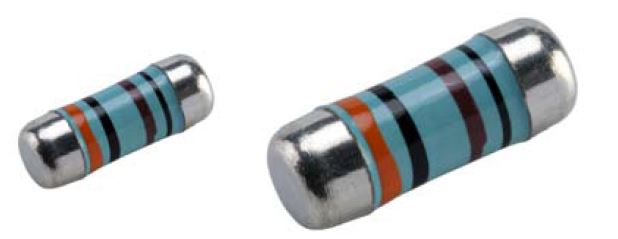
MELF (WRM, WRM-HP, WRM-HV series)

MELF (WRM, WRM-HP, WRM-HV series)

Cylindrical surface-mount resistors for automotive and industrial boards. Selected ranges are AEC-Q200 qualified, with tolerance down to 0.1% and TCR down to 5ppm/°C. WRM-HP extends the available power rating to 1W, while WRM-HV is designed for high-resistance and high-voltage applications.

Industrial power supply electronics
 

Selecting the Right Metal Film Resistor

  • Tolerance & TCR — Best Tolerance and Best TCR define the highest-precision grades available, down to 0.01% and 1ppm/°C on PCF thin-film chips, and may apply only to a restricted ohmic range. Confirm the specific part's datasheet rather than relying on a single series-wide figure.
  • Chip vs. Leaded — Surface-mount thin-film chips, including PCF and APC, and MELF parts such as WRM suit automated assembly and compact precision circuits. Leaded CAR, RC and RCP parts suit high-precision analogue and through-hole designs.
  • Power Rating — The maximum continuous power a resistor can dissipate at or below its Rated Ambient Temperature. Above the resistor's Critical Resistance, power rating stops being the limiting factor and Limiting Element Voltage takes over.
  • Operating Temperature — Check the Rated Ambient Temperature, where full power rating still applies, against the Maximum Ambient Temperature, which is the upper operating limit.
  • Sulphur-Bearing Atmospheres — Sulphur can corrode silver-based terminations in standard chip resistors, causing resistance drift or open-circuit failure. Where boards may be exposed to sulphur, specify an anti-sulphur range such as the appropriate APC range rather than a standard chip resistor.
  • Surge & Overload — Metal film is optimised for precision and stability rather than high surge energy. Where a circuit experiences inrush, repetitive pulses or overload events, consider a pulse-withstanding range or a suitable fusible metal film series.

Frequently Asked Questions

What is a metal film resistor used for?

Metal film resistors are used in precision analogue circuits where low noise, tight tolerance, low TCR and long-term stability are important. Typical applications include instrumentation, medical equipment, industrial controls, aerospace electronics, reference circuits and signal conditioning.

What is the difference between metal film and thick film resistors?

Metal film resistors use a deposited metal or metal-alloy resistive layer and are generally selected for tighter tolerance, lower TCR, lower noise and greater long-term stability. Thick film resistors use a screen-printed resistive material and typically offer broader general-purpose availability, stronger pulse capability and lower cost.

What is the difference between metal film and carbon film resistors?

Metal film resistors generally provide tighter tolerance, lower TCR, lower noise and better long-term stability than carbon film resistors. Carbon film remains suitable for cost-sensitive general-purpose circuits where precision and temperature stability are less critical.

Are thin film and metal film the same thing?

Not exactly. Thin film describes a manufacturing process in which a very thin resistive layer is deposited onto a substrate. Metal film describes the resistive material technology more broadly. Many precision metal film chip resistors are made using thin-film processes, while axial metal film resistors use a metal film deposited onto a ceramic rod.

What is an anti-sulphur resistor?

An anti-sulphur resistor uses materials and termination construction designed to resist sulphur-related corrosion. It is intended for environments where airborne sulphur compounds could attack conventional silver-based terminations and cause resistance drift or open-circuit failure.

Related resistor categories: All Resistors  |  Thick Film Resistors  |  Current Sense Resistors  |  Fusible Resistors  |  Pulse Withstanding Resistors